
Digital Marketing Funnel Explained: Stages & Benefits | A digital marketing funnel is a structured process that moves potential customers through different stages, ultimately turning them into loyal clients. Below, you’ll find detailed insights into its stages, significance, and practical examples.
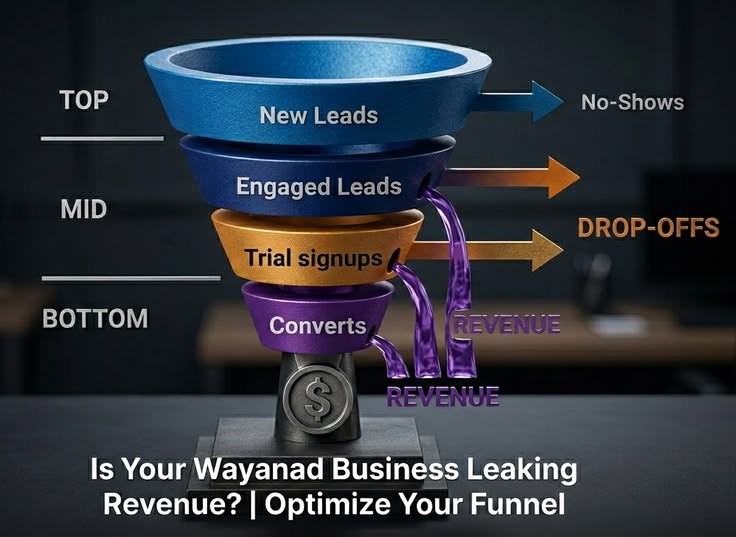
Digital Marketing Funnel:
Digital marketing enables businesses to connect with audiences online through websites, social media, emails, and advertisements. However, simply reaching people is not enough. To convert visitors into customers, businesses rely on a structured approach known as the digital marketing funnel.
The digital marketing funnel is a step-by-step process that guides potential customers from their first interaction with a brand to making a purchase and even beyond, where they become loyal, repeat customers. It helps businesses understand customer behavior and deliver the right message at each stage of the journey.
The funnel typically includes four main stages: awareness, interest, decision, and action. At each stage, marketers use different strategies such as blog content, videos, email campaigns, and special offers to move potential customers closer to buying.
The importance of the digital marketing funnel lies in its ability to make marketing efforts more focused and effective. It helps businesses save time and resources, improve customer engagement, and drive consistent growth. By using the funnel correctly, brands can build stronger relationships with their audience and increase long-term success.
Digital Marketing Funnel Explained: Meaning, Stages & Benefits
A digital marketing funnel is a strategic approach that illustrates how potential customers progress from first discovering a brand to becoming loyal, long-term buyers. It helps businesses guide their audience through each stage of the journey using the right mix of marketing tools and content.
This funnel is designed to capture attention, generate interest, and drive action through channels such as blogs, social media, email campaigns, videos, and online advertising. As users move through each stage, they receive more relevant and personalized information that encourages them to make a purchase.
The digital marketing funnel enables businesses to reach the right audience, enhance engagement, and achieve sustainable growth. It also improves marketing efficiency by delivering the right message at the right time, ultimately increasing return on investment.
The Essential Stages of a Digital Marketing Funnel
The digital marketing funnel is a structured journey that illustrates how individuals move from first discovering a brand to becoming paying and loyal customers. It helps businesses apply the right digital marketing strategies at each stage, making it easier to guide potential buyers through the entire decision-making process.
Every stage of the funnel plays a crucial role and requires a tailored marketing approach. By addressing customer needs, answering their questions, and building trust, businesses can effectively move prospects closer to making a purchase.
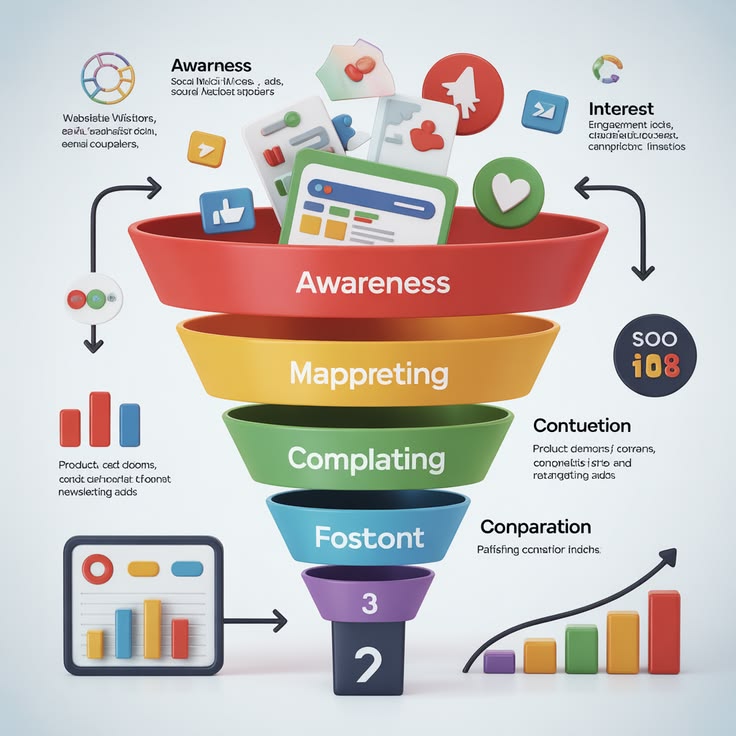
1. Awareness Stage
The awareness stage is the first step in the digital marketing funnel, where people are introduced to a business, product, or service for the first time. At this point, they may not be ready to make a purchase, but they begin to recognize the brand through its online presence.
To capture attention, businesses use strategies such as SEO-driven blog content, social media posts, paid advertisements, and influencer collaborations. The main objective at this stage is to boost brand visibility, reach a wider audience, and drive new visitors to the website.
Key performance indicators to track during this stage include impressions, website traffic, ad clicks, and social media engagement, as these metrics help measure how effectively the brand is reaching potential customers.
2. Interest Stage
During the interest stage, potential customers develop curiosity and begin exploring the brand more deeply. They actively seek information to understand what the business offers and how it can meet their needs.
At this stage, content marketing plays a key role. Strategies such as informative blog posts, email newsletters, dedicated landing pages, free eBooks, and webinars are highly effective. The primary goal is to provide valuable insights, educate the audience, and build a strong connection with potential customers.
Important metrics to track in this stage include time spent on the website, page views, email subscriptions, and content downloads, as these indicate how engaged users are with the brand.
3. Consideration Stage
The consideration stage is when potential customers actively compare different brands or solutions. At this point, they are more serious about addressing their needs and are carefully evaluating the best available options.
To build trust and influence their decision, businesses can use strategies such as customer testimonials, case studies, product comparison pages, and video demonstrations. Retargeting ads are also effective in reminding users about the product after they leave the website.
The main objective at this stage is to highlight the brand’s value, establish credibility, and stand out from competitors.
Key metrics to track include repeat website visits, demo requests, engagement rate, and click-through rate, as these indicate strong interest and intent from potential customers.
4. Conversion Stage
The conversion stage is when a potential customer is ready to take action whether it’s making a purchase, signing up for a service, or booking a consultation. At this point, businesses need to remove any friction and make the process as smooth as possible.
Effective strategies include using clear and compelling call-to-action buttons, offering limited-time discounts, simplifying checkout processes, and providing personalized deals. These tactics help encourage users to complete their decision with confidence.
The main goal at this stage is to create a seamless and persuasive experience that turns prospects into paying customers.
Key metrics to track include sales, form submissions, completed purchases, and successful sign-ups, as these directly reflect conversion success.

5. Retention and Advocacy Stage
The funnel doesn’t end after a purchase. The retention and advocacy stage focuses on maintaining strong relationships with customers and turning them into loyal supporters of the brand.
At this stage, businesses use strategies such as loyalty programs, follow-up emails, customer feedback surveys, and referral incentives to keep customers engaged and satisfied. These efforts help build trust and encourage long-term connections.
This stage is crucial because satisfied customers are more likely to make repeat purchases and recommend the brand to others, driving organic growth.
Key metrics to track include customer retention rate, referral rate, customer lifetime value, and repeat purchases, as these indicate long-term success and customer loyalty.
How a Digital Marketing Funnel Helps Your Business Grow Faster
A digital marketing funnel is an effective approach that guides potential customers from their first interaction with a brand to becoming loyal, repeat buyers. By applying the right marketing strategies at each stage of the customer journey, businesses can create a more structured and impactful path to conversion.
Organizations that implement a well-defined funnel strategy often achieve stronger brand visibility, generate more qualified leads, and increase overall sales compared to those without a clear plan.
Here’s how a digital marketing funnel strategy contributes to business growth:
1. Targeted Messaging
At every stage of the funnel, businesses deliver the right message to the right audience. This approach ensures that content remains relevant, enhances user engagement, and significantly improves the likelihood of a positive response.
2. Lead Nurturing
The funnel helps build trust with potential customers by delivering valuable content such as blog posts, email campaigns, special offers, and retargeting ads. These efforts keep prospects engaged and interested until they are ready to make a purchase.
3. Conversion Optimization
By analyzing where users drop off in the funnel, marketers can optimize pages, improve calls-to-action, and refine offers to boost conversion rates and create a smoother buying experience.
4. Customer Retention and Advocacy
The funnel also emphasizes customer satisfaction after the purchase. Strategies such as loyalty programs, follow-up emails, and referral incentives help transform one-time buyers into loyal brand advocates.
A well-structured digital marketing funnel strategy not only converts visitors into customers but also builds lasting relationships, driving long-term and sustainable business growth.
Real-Life Examples of Digital Marketing Funnels

Digital marketing funnels help businesses guide potential customers from initial brand awareness to making a purchase and eventually becoming loyal customers. Below are simple and practical examples used across different industries:
- AIDA Funnel
The AIDA funnel is widely used by software companies and e-commerce businesses to move users through four key stages: Attention, Interest, Desire, and Action.
For instance, a company may run online ads to capture attention, offer a free webinar to generate interest, share customer success stories or case studies to build desire, and provide a free trial or special offer to encourage action.
- Content-Based Funnel
Service-based businesses and B2B companies often rely on content-driven funnels to educate their audience and gradually convert them into customers.
They typically use SEO-optimized blog posts to attract visitors, provide downloadable resources like templates or guides, nurture leads through informative email campaigns, and use live product demos or consultations to close sales.
- Webinar Funnel
Coaches, consultants, and online educators commonly use webinar funnels to build trust and promote their services.
In this approach, they invite users to attend a free webinar, deliver valuable insights during the session, showcase testimonials or success stories, and present a limited-time offer to encourage sign-ups or purchases.
- E-commerce Funnel
Online retailers use e-commerce funnels to convert casual visitors into loyal customers.
For example, a brand may run ads on Instagram to attract potential buyers, retarget them with engaging product videos, send cart reminder emails to recover abandoned purchases, and offer loyalty rewards after the sale to encourage repeat business.
- TOFU–MOFU–BOFU Funnel
This funnel model is widely used across industries and divides marketing efforts into three key stages:
Top of Funnel (TOFU): Focuses on creating awareness through blog posts, social media content, and other informative resources.
Middle of Funnel (MOFU): Aims to build interest and engagement using email campaigns, product guides, and educational content.
Bottom of Funnel (BOFU): Concentrates on converting leads into customers through strategies like free trials, demos, and limited-time offers.
This structured approach helps businesses deliver the right content at each stage, guiding potential customers smoothly toward making a purchase.
Importance of Digital Marketing Funnel
The digital marketing funnel helps businesses effectively guide potential customers through every stage of the buying journey. It adds structure to marketing efforts and improves outcomes at each step of the process.
Guides customers from initial awareness to purchase and long-term loyalty.
Delivers targeted and relevant content based on customer needs at each stage.
Builds trust through lead nurturing using emails, blogs, and valuable resources.
Enhances conversion rates by minimizing drop-offs and improving user experience.
Encourages customer retention through loyalty programs and ongoing communication.
Provides measurable results through clear data and key performance indicators (KPIs).
Supports sustainable growth by turning leads into loyal brand advocates.
Overall, implementing a digital marketing funnel makes marketing strategies more focused, efficient, and results-driven.
FAQs
A marketing funnel outlines the journey a customer follows—from first discovering a brand to completing a purchase. It helps marketers deliver the right message at each stage, ensuring a more effective and targeted approach.
The three primary stages of a marketing funnel are Top (Awareness), Middle (Consideration), and Bottom (Conversion). Each stage uses tailored content and strategies to guide potential customers closer to making a purchase.
A company may use social media ads to capture attention, follow up with email campaigns to nurture interest, and then present a special discount to motivate customers to make a purchase.
Identify the key stages of the funnel and understand customer actions at each step. Create valuable content tailored to every stage, and continuously track performance to refine strategies and automate the process over time.