
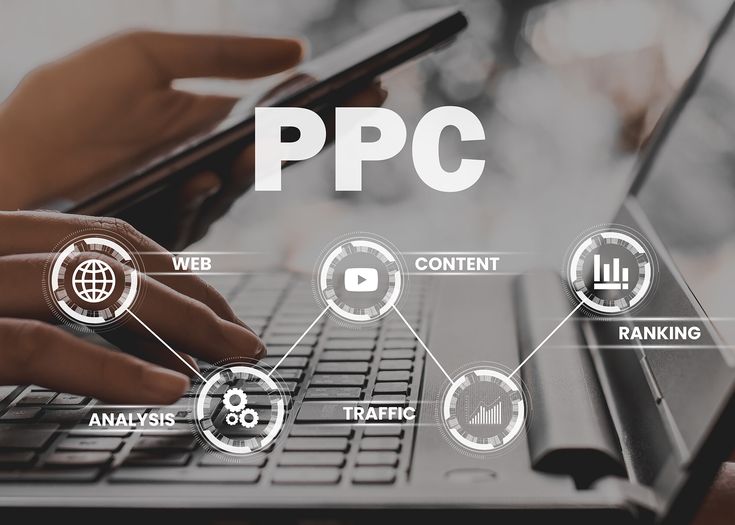
What is PPC? Full Form, Meaning, and How It Works |Pay-Per-Click (PPC) is a digital advertising model in which advertisers pay a fee each time a user clicks on their ad. It is a highly effective way to attract targeted traffic to websites, as ads are shown to users based on specific keywords, interests, or search intent. PPC campaigns help businesses increase visibility, generate leads, and drive conversions efficiently.
Pay-Per-Click (PPC) is a digital advertising model where businesses pay only when a user clicks on their ad. Instead of paying just for ad visibility, advertisers are charged based on actual engagement, making PPC a cost-efficient method for driving website traffic. These ads are commonly displayed on search engines like Google and Bing, as well as on social media platforms such as Facebook and Instagram.
In PPC campaigns, advertisers bid on keywords that are relevant to their products or services. When users search for those keywords or interact with related content, the ads may appear. The cost per click is influenced by factors such as bidding amount, competition, and the quality and relevance of the ad.
PPC, which stands for “Pay-Per-Click,” is widely used across digital marketing channels. A major advantage of this model is its measurability businesses can track metrics like clicks, impressions, and conversions. These insights help optimize campaigns, manage budgets effectively, and improve return on investment (ROI), making PPC a highly effective strategy for driving targeted traffic quickly.
Full Form of PPC :What is PPC?
Pay-Per-Click (PPC) is an online advertising model where businesses pay only when users click on their ads. Rather than depending entirely on organic traffic through SEO, PPC helps drive instant website visits by paying for actual user interactions. It is commonly used on platforms like Google Ads, Bing Ads, and various social media channels.
In a standard PPC campaign, advertisers place bids on keywords relevant to their target audience. When users search for those terms, the ads may appear in the results. Each time someone clicks on the ad, the advertiser is charged. The main objective of PPC is to bring highly targeted traffic that can result in more leads, sales, or conversions.
PPC is an effective strategy for businesses that want fast visibility and a competitive edge in search engine rankings. With proper optimization, advertisers can control spending, reach specific audiences, and track campaign performance in real time to achieve better outcomes.
How Does PPC Work?
PPC, or Pay-Per-Click, is a digital advertising method where businesses pay a fee each time someone clicks on their ad. Its primary goal is to drive targeted traffic to a website or landing page by paying for user engagement. PPC is widely used to achieve fast visibility across search engines and social media platforms, making it an effective strategy for reaching potential customers quickly.
How Pay-Per-Click (PPC) Works: Process Overview
1.Keyword Bidding Process : What is PPC?
Advertisers begin by selecting the keywords they want to target these are the terms users are likely to search for when looking for related products or services. Each keyword comes with a specific cost, and advertisers place bids to determine how much they are willing to pay for every click on their ad.
2.Ad Creation Process : What is PPC?
After selecting the target keywords, advertisers develop ads that are displayed when users search for those terms. These ads usually consist of a compelling headline, a brief description, and a link directing users to a relevant landing page.
1.Auction Process
When a user enters a query on a search engine like Google, an automated ad auction takes place to decide which ads will appear on the results page. This process considers several factors, including keyword relevance, the advertiser’s bid amount, and the overall quality of the ad and its landing page.
2.Ad Rank:
Search engines use a system called Ad Rank to decide where ads appear in search results. This ranking is determined by multiple factors, including the advertiser’s bid, the quality of the ad, and the user experience of the landing page. A higher Ad Rank increases the chances of securing a better position on the search engine results page (SERP).
PPC Advertising Models Explained
Pay-Per-Click (PPC) is a widely used digital advertising model in which advertisers pay each time a user clicks on their ad. There are multiple PPC models available, each designed to support different marketing objectives, target audiences, and advertising platforms. Understanding these models is essential for creating effective and successful PPC campaigns. Below are some of the most common PPC models:
1. Cost Per Click (CPC)
Cost Per Click (CPC) is the most widely used PPC model. In this approach, advertisers bid on specific keywords and pay a fixed amount each time their ad is clicked. The cost per click depends on several factors, including keyword competition, ad quality, and the bid value. Generally, highly competitive keywords result in higher costs per click.
Example: If your bid is $1 per click and your ad gets 100 clicks, the total cost of the campaign will be $100.
Advantages of CPC:
Costs are directly linked to user engagement.
Advertisers pay only when users click on their ads, making it a cost-effective and efficient spending model.
What is Cost Per Thousand Impressions(CPM)?
Cost Per Thousand Impressions (CPM) is a pricing model in which advertisers pay for every 1,000 times their ad is displayed, regardless of whether users click on it. This model is commonly used for display ads and banner advertising.
Example: If your CPM rate is $5, you will be charged $5 for every 1,000 impressions your ad receives.
Advantages of CPM:
Ideal for brand awareness campaigns where visibility is the main objective.
Allows easier budgeting for large-scale advertising campaigns.
What is Cost Per Acquisition (CPA)?
Cost Per Acquisition (CPA) is a PPC model in which advertisers pay only when a user completes a specific action, such as making a purchase, signing up for a newsletter, or submitting a form. This conversion-based approach is ideal for businesses focused on generating leads or sales.
Example: If your CPA is set at $20, you will pay $20 only when a user completes the desired action on your website.
Advantages of CPA:
Best suited for campaigns focused on measurable conversions and return on investment (ROI).
Minimizes wasted spending by ensuring you only pay for meaningful user actions.
What is Cost Per View (CPV)?
Cost Per View (CPV) is a pricing model mainly used in video advertising, such as on platforms like YouTube. In this model, advertisers are charged when users watch their video ads. A “view” is typically counted when a user watches a specific portion of the video, often around 30 seconds or more, depending on the platform.
Example: If your CPV rate is $0.10, you will pay $0.10 each time a user watches your video ad.
Advantages of CPV:
Ideal for video marketing campaigns and increasing audience engagement.
Ensures advertisers pay only when users actually view and interact with the video content.
What is Cost Per Engagement (CPE)?
Cost Per Engagement (CPE) is a pricing model designed for campaigns that prioritize meaningful user interaction. In this approach, advertisers are charged when users take specific actions on an ad, such as liking, sharing, commenting, or interacting with its elements—most commonly on social media platforms.
Example: If your CPE rate is $0.50, you will pay $0.50 each time a user engages with your ad, whether by liking, sharing, or commenting.
Advantages of CPE:
Provides clear insights into how users interact with your ads.
Well-suited for campaigns focused on increasing brand awareness and audience engagement.
Why PPC is Important for Online Growth?
Pay-Per-Click (PPC) advertising plays a vital role in digital marketing, providing a range of advantages for businesses of all sizes. Here’s why PPC is an essential part of any effective marketing strategy:
1.Instant Results and Traffic
PPC campaigns can generate instant traffic to your website. Unlike SEO, which often takes time to produce results, Pay-Per-Click ads start attracting visitors as soon as they are launched. This makes PPC an ideal solution for businesses seeking quick visibility and immediate traffic growth.
2.Highly Targeted Audience Reach
With PPC, businesses can target specific audiences based on factors such as location, language, device type, time of day, interests, demographics, and search behavior. This precise targeting helps reach the most relevant and high-intent users, resulting in improved engagement and higher conversion rates.
3.Control Your PPC Budget
PPC campaigns give you complete control over your advertising budget. You can set limits based on daily, monthly, or campaign-level spending, allowing you to manage costs effectively. In most PPC models, such as CPC, you only pay when a user clicks on your ad, ensuring your budget is spent on genuine engagement and potential leads.
What are the top PPC advertising platforms?
When it comes to Pay-Per-Click (PPC) advertising, businesses have access to a variety of platforms to promote their products and services. Each platform provides different targeting features, ad formats, and audience reach, making it important to choose one that aligns with your specific marketing objectives. Below are some of the most popular PPC advertising platforms:
1. Google Ads
Google Ads (formerly known as Google AdWords) is one of the most popular and powerful PPC platforms. It enables businesses to show ads on Google search results as well as across the Google Display Network, which includes a vast range of websites, apps, and video platforms.
- Features:
- Text ads on search engine results pages
- Display ads on partner websites
- Remarketing to reconnect with previous visitors
- Video advertising on YouTube
- Shopping ads for e-commerce businesses
- Why Use It:
- Google Ads offers extensive reach and precise targeting based on user search intent, making it an excellent choice for businesses aiming to connect with highly interested customers.
2. Bing Ads
Microsoft Advertising (formerly Bing Ads) is another widely used PPC platform. Although it has a smaller audience compared to Google, it can still deliver valuable traffic. It often features lower competition and reduced cost-per-click (CPC), making it a cost-effective option for many advertisers.
Features:
- Ads displayed on Bing search results
- Placement on partner platforms like Yahoo and AOL
- Remarketing campaign capabilities
- Integration with Microsoft tools and services
Why Use It:
Microsoft Advertising is a great option for reaching audiences who use Bing and its partner networks. Its typically lower CPC rates make it especially attractive for businesses looking to maximize their advertising budget.
3. Facebook Ads
Facebook Ads is one of the leading social media advertising platforms, offering highly targeted ad placements across Facebook, Instagram, and the Audience Network. It enables advertisers to reach users based on demographics, interests, behaviors, and more.
Features:
- Carousel ads to showcase multiple images or products
- Video ads for engaging visual content
- Lead generation ads for capturing user information
- Dynamic product ads, ideal for e-commerce businesses
- Instagram ad placements managed through Facebook
Why Use It:
Facebook Ads provides advanced targeting options, allowing businesses to reach specific audiences with precision. It is especially effective for brand awareness, lead generation, and driving online sales.
4. Instagram Ads
Instagram Ads, part of the Meta ecosystem, is a highly visual advertising platform ideal for engaging audiences through eye-catching images and videos. It works especially well for industries like e-commerce, fashion, beauty, food, and lifestyle.
Features:
- Photo and video ad formats
- Stories ads for immersive, full-screen experiences
- Shopping ads that allow users to purchase products directly within the app
Why Use It:
Instagram’s visually focused format helps businesses create engaging and appealing ads, making it a great choice for brands that rely on strong visual content to attract and convert customers.
5. LinkedIn Ads
LinkedIn Ads is a professional-focused advertising platform, making it an ideal choice for B2B (business-to-business) marketing. It enables advertisers to target users based on professional details such as job title, company, industry, and more.
Features:
- Sponsored content, including posts and articles
- Text and image ads in the LinkedIn feed
- Sponsored InMail for direct messaging to users’ inboxes
- Dynamic ads personalized for individual users
Why Use It:
LinkedIn Ads is highly effective for generating leads and building brand awareness among professionals. It is particularly valuable for industries like software, recruitment, and business services.
FAQs
PPC provides instant website traffic, accurate audience targeting, flexible budget control, and clear, measurable performance results. It is a powerful strategy for attracting relevant visitors and achieving business objectives such as generating leads, increasing sales, and building brand awareness.
The cost of PPC varies based on several factors, such as keyword competition, ad quality, and the bid amount set by the advertiser. Businesses can also define daily or monthly budgets to effectively manage and control their advertising expenses.
Yes, PPC is an effective advertising strategy for small businesses. With the right targeting and budget control, small businesses can compete with larger brands and attract relevant traffic to their websites.
https://shorturl.fm/FuTht
[…] optimizing images, using caching, and choosing reliable hostingXML Sitemap: Create and maintain an XML sitemap to help search engines easily discover and index your pagesFix Broken Links: Regularly identify and […]
https://shorturl.fm/svl6o