
On-Page SEO: What It Is, Why It Matters & How to Do It | By consistently implementing On-Page SEO best practices including high-quality content, keyword optimization, optimized title tags and meta descriptions, SEO-friendly URLs, structured headings, image optimization, internal linking, page speed improvements, mobile responsiveness, and Technical SEO enhancements businesses can significantly improve search engine rankings, organic traffic, user engagement, domain authority, lead generation, and conversion rates. A strong On-Page SEO strategy forms the foundation of long-term digital marketing success, helping websites remain competitive and visible in search engine results.
What Is On-Page SEO and How Does It Work?
On-Page SEO includes optimizing essential elements such as title tags, meta descriptions, heading tags (H1–H6), SEO-friendly URL structure, keyword placement, high-quality content, image optimization with descriptive alt text, internal linking, schema markup, page speed, mobile responsiveness, Core Web Vitals, and overall website usability. Each of these elements helps search engines better understand your content while improving how users interact with your website.
A successful On-Page SEO strategy also emphasizes creating original, informative, and user-focused content that satisfies search intent, naturally incorporates relevant keywords, and follows Google’s E-E-A-T (Experience, Expertise, Authoritativeness, and Trustworthiness) guidelines. Additionally, ensuring that your website is fast-loading, mobile-friendly, secure (HTTPS), and easy to navigate enhances user satisfaction and contributes to stronger search performance.
On Page SEO Types
On-Page SEO consists of multiple optimization techniques that improve the relevance, usability, and search engine visibility of individual web pages. Each element plays an important role in helping search engines understand your content while providing visitors with a better browsing experience. Below are the key types of On-Page SEO:
1. Title Tag Optimization
The title tag is one of the most important On-Page SEO ranking factors because it tells both search engines and users what a webpage is about. A well-optimized title tag improves search visibility and encourages users to click on your page in search results.
Best Practices:
- Include your primary keyword naturally, preferably near the beginning.
- Keep the title between 50–60 characters.
- Write a unique, descriptive, and compelling title for every page.
- Include your brand name where appropriate to strengthen brand recognition.
2. Meta Description Optimization
A meta description provides a brief summary of a webpage that appears below the title in search engine results. Although it is not a direct ranking factor, a compelling meta description can significantly improve click-through rates (CTR).
Best Practices:
- Write unique descriptions for every page.
- Keep the length between 150–160 characters.
- Include relevant keywords naturally.
- Add a strong call-to-action (CTA) that encourages users to visit the page.
3. SEO-Friendly URL Structure
A clean and descriptive URL structure helps search engines understand page content while making URLs easier for users to read and remember.
Best Practices:
- Keep URLs short, simple, and descriptive.
- Include your primary keyword where relevant.
- Use hyphens (-) to separate words.
- Avoid unnecessary numbers, symbols, and dynamic parameters.
- Maintain a logical website hierarchy.
4. Header Tags (H1, H2, H3, H4, etc.)
Header tags organize webpage content into a logical hierarchy, making it easier for both users and search engines to understand the page structure.
Best Practices:
- Use one H1 tag per page that includes the primary keyword.
- Use H2 tags for major sections and H3–H6 tags for supporting subsections.
- Keep headings clear, descriptive, and relevant to the content.
- Maintain a logical heading structure to improve readability and SEO.
Proper optimization of these On-Page SEO elements helps improve search engine rankings, user experience, crawlability, and organic traffic, creating a strong foundation for a successful SEO strategy.
On Page Seo Tools
There are numerous On-Page SEO tools available that help website owners, marketers, and SEO professionals analyze, optimize, and improve their websites for better search engine performance. These tools provide valuable insights into content optimization, keyword usage, technical SEO, website performance, user experience, and search visibility. Below are some of the most popular and effective On-Page SEO tools:
Google Search Console
Google Search Console (GSC) is a free tool provided by Google that helps you monitor, analyze, and maintain your website’s presence in Google Search. It provides detailed insights into search performance, keyword rankings, indexing status, crawl errors, Core Web Vitals, mobile usability, page experience, XML sitemaps, and technical SEO issues. GSC also helps identify opportunities to improve your website’s visibility and organic traffic.
Yoast SEO
Yoast SEO is one of the most popular WordPress SEO plugins for optimizing On-Page SEO. It helps improve title tags, meta descriptions, keyword optimization, readability, internal linking, schema markup, XML sitemaps, and technical SEO settings. Its real-time content analysis makes it suitable for both beginners and experienced SEO professionals.
SEMrush
Its On-Page SEO Checker provides personalized recommendations to improve individual pages and increase search rankings.
Ubersuggest
Developed by Neil Patel, Ubersuggest is an easy-to-use SEO tool that provides keyword research, content ideas, competitor analysis, backlink data, technical SEO audits, and On-Page SEO recommendations. It helps identify optimization opportunities, monitor keyword rankings, and improve website performance with actionable insights.
Google PageSpeed Insights
Google PageSpeed Insights analyzes the loading speed and overall performance of your website on both desktop and mobile devices. It evaluates important metrics such as Core Web Vitals, including Largest Contentful Paint (LCP), Interaction to Next Paint (INP), and Cumulative Layout Shift (CLS), while offering practical recommendations to improve page speed, user experience, and Technical SEO.
Using these On-Page SEO tools regularly allows you to identify optimization opportunities, resolve technical issues, improve content quality, enhance website performance, and strengthen your overall SEO strategy. Combined with high-quality content and effective Off-Page SEO, these tools help increase search engine rankings, organic traffic, user engagement, and long-term digital marketing success.
On Page SEO and Off Page SEO
On-Page SEO and Off-Page SEO are two essential pillars of a successful Search Engine Optimization (SEO) strategy. While both aim to improve your website’s search engine rankings, organic traffic, and online visibility, they focus on different areas of optimization. On-Page SEO involves optimizing the content, structure, and technical elements within your website, whereas Off-Page SEO focuses on building your website’s authority, credibility, and reputation through external signals such as backlinks, brand mentions, and digital marketing activities.
On page SEO factors
On-Page SEO factors are the elements within your website that can be optimized to improve its search engine visibility, organic rankings, and user experience. These factors help search engines understand your website’s content, determine its relevance to user search queries, and evaluate the overall quality and usability of your webpages. Properly optimizing these On-Page SEO elements enables search engines to crawl, index, and rank your content more effectively while providing visitors with a faster, more engaging, and user-friendly experience.
1. Title Tags
- The title tag is one of the most important On-Page SEO elements because it helps search engines understand the topic of a webpage while serving as the clickable headline displayed in search engine results pages (SERPs). A well-crafted title tag improves search visibility, keyword relevance, and click-through rates (CTR), making it a critical factor for increasing organic traffic.
2. Meta Descriptions
- The meta description is a brief summary of your webpage that appears below the title tag in search engine results pages (SERPs). Although it is not a direct Google ranking factor, a well-written meta description plays a significant role in improving click-through rates (CTR) by encouraging users to visit your website. An engaging and informative description helps searchers understand the value of your content before they click.
3. URL Structure
- A well-structured URL is an important On-Page SEO factor that helps both search engines and users understand the purpose and content of a webpage. Clean, descriptive, and easy-to-read URLs improve website usability, support efficient crawling and indexing, and contribute to better search engine visibility. SEO-friendly URLs also enhance user trust and can increase click-through rates from search results.
4. Header Tags (H1, H2, H3, etc.)
- Header tags (H1, H2, H3, H4, H5, and H6) are essential On-Page SEO elements that organize your content into a clear and logical structure. They help both search engines and users understand the hierarchy and main topics of a webpage, making content easier to read, navigate, and index. Proper use of header tags improves content readability, enhances user experience, and supports better search engine optimization.
5. Keyword Optimization
- Keyword optimization is a fundamental aspect of On-Page SEO that helps search engines understand the topic and relevance of your content. Incorporating primary keywords, secondary keywords, and related semantic keywords naturally throughout your webpage improves its ability to rank for relevant search queries while ensuring the content remains valuable and easy to read for users.
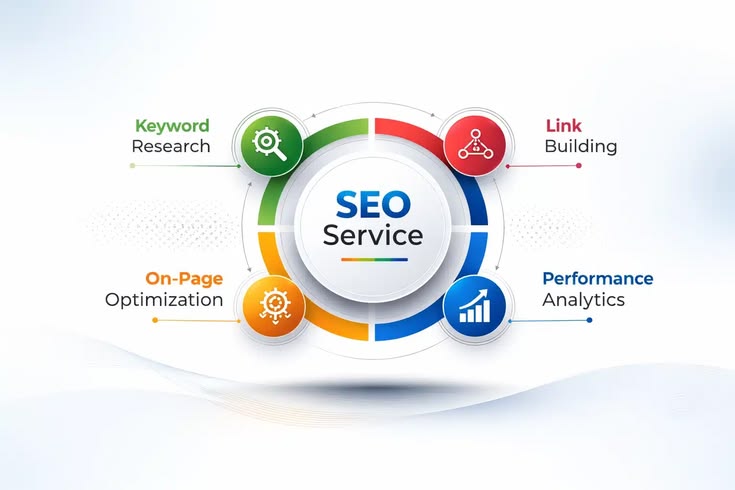
On-Page SEO Techniques to Improve Your Website Rankings
Implementing effective On-Page SEO techniques is essential for improving your website’s search engine rankings, organic visibility, user experience, and overall website performance. On-Page SEO focuses on optimizing the content, structure, and technical elements within your website so that search engines can easily crawl, understand, and rank your pages while providing visitors with a seamless browsing experience.
1. Optimize Title Tags
- Search engine results pages (SERPs). A well-optimized title tag improves search visibility, keyword relevance, click-through rates (CTR), and overall organic performance.
- For the best SEO results, create a unique, descriptive, and compelling title tag for every page on your website. Naturally include your primary target keyword, preferably near the beginning of the title, while ensuring it accurately reflects the page’s content and search intent. Keep the title between 50–60 characters to prevent truncation in search results, and write it in a way that encourages users to click without using keyword stuffing.
- Example: Best Digital Marketing Agency in New York | XYZ Marketing
- A properly optimized title tag helps improve search engine rankings, user engagement, organic traffic, and click-through rates, making it one of the most essential elements of a successful On-Page SEO strategy.
2. Write Compelling Meta Descriptions
- A well-optimized meta description provides a concise summary of your webpage and appears below the title tag in search engine results pages (SERPs). Although meta descriptions are not a direct Google ranking factor, they play a significant role in improving click-through rates (CTR) by giving users a compelling reason to visit your website. An informative and engaging meta description helps increase visibility, attract qualified traffic, and improve overall search performance.
- For the best results, write a unique, relevant, and persuasive meta description for every page. Keep it between 150–160 characters, naturally include your primary keyword and related search terms, clearly describe the page’s value, and finish with a strong call-to-action (CTA) such as “Learn More,” “Get Started,” “Contact Us,” or “Shop Now.”
- Example: Learn proven SEO strategies with XYZ Agency. Increase your website traffic, improve Google rankings, and grow your business with expert SEO solutions. Get started today!
3. Optimize URL Structure
SEO-friendly URLs are an essential part of On-Page SEO because they help both search engines and users quickly understand the content of a webpage. A clean, descriptive, and well-structured URL improves website crawlability, indexing, user experience, and overall search engine visibility. Easy-to-read URLs also increase user trust and can contribute to higher click-through rates (CTR) in search results.
- Example
- ✅ www.yoursite.com/on-page-seo-techniques
4. Use Proper Header Tags (H1, H2, H3)
- The H1 tag should be used only once per page to represent the primary topic and should naturally include your main keyword. Use H2 tags to divide the content into major sections and H3 tags for supporting subsections, creating a logical content flow. Avoid using header tags solely for styling purposes, and ensure each heading accurately describes the content that follows.
- Example
- H1: Ultimate Guide to On-Page SEO Techniques
- H2: Why On-Page SEO Is Important
- H2: Essential On-Page SEO Best Practices
- H3: Optimizing Title Tags for SEO
- H3: Writing Effective Meta Descriptions
5. Focus on Keyword Optimization
- Include your primary keyword in the title tag, meta description, H1 heading, URL, introductory paragraph, image alt text, and throughout the body content where it fits naturally. Use secondary and long-tail keywords in subheadings and supporting content to improve topical relevance. Avoid keyword stuffing, as excessive keyword usage can reduce readability, harm user experience, and negatively impact search engine rankings.
- SEO Tip : Incorporate semantic keywords (also known as related keywords) and long-tail search phrases that are closely associated with your primary keyword. These related terms help search engines better understand your content, improve topical authority, increase keyword coverage, and enhance your chances of ranking for a wider range of relevant search queries.
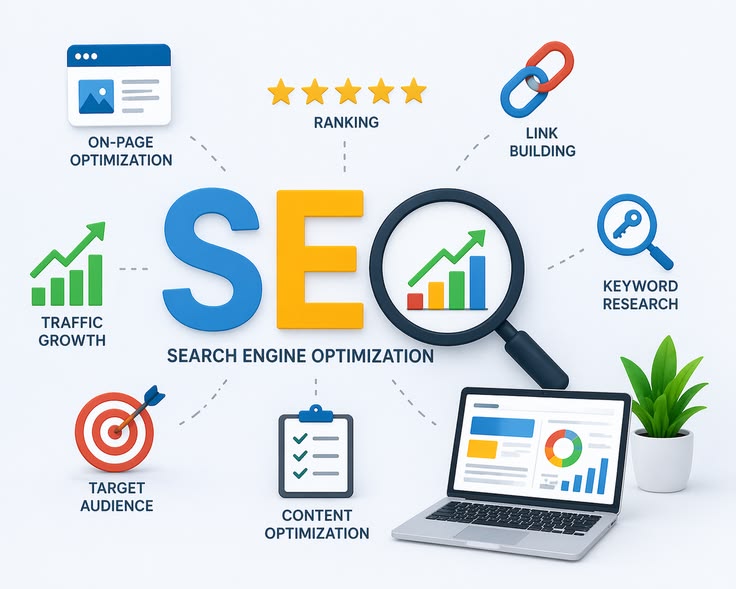
6. Create High-Quality, Engaging Content
- To maintain strong SEO performance, regularly review, update, and refresh your content with the latest information, statistics, trends, and industry developments. Keeping your content current helps improve relevance, maintains search visibility, and signals to search engines that your website is actively maintained.
- SEO Tip
- Enhance your content by combining text, images, videos, infographics, charts, tables, and interactive elements to create a more engaging user experience. Optimize all multimedia elements with descriptive file names, keyword-rich alt text, appropriate compression, and modern image formats to improve page speed, accessibility, and overall On-Page SEO.
7. Optimize Images
- For the best SEO results, compress images without sacrificing quality, use modern image formats such as WebP or AVIF, choose appropriate image dimensions, and create descriptive file names that reflect the image content. Add keyword-rich, descriptive alt text that accurately explains the image for search engines and users who rely on screen readers. This improves accessibility and increases the chances of your images appearing in Google Images search results.
- Example
- ✅ laptop-digital-marketing-strategy.webp
8. Improve Page Load Speed
- To improve your website’s loading speed, regularly analyze its performance using tools such as Google PageSpeed Insights, Google Lighthouse, GTmetrix, and Pingdom Website Speed Test. These tools identify performance issues and provide actionable recommendations to optimize your website.
- Common page speed optimization techniques include:
- Compressing and resizing images using modern formats like WebP or AVIF.
- Minifying CSS, JavaScript, and HTML files.
- Enabling browser caching and GZIP/Brotli compression.
- Using a Content Delivery Network (CDN) to deliver content faster.
- Reducing unnecessary redirects and HTTP requests.
- Optimizing server response time (TTFB).
- Implementing lazy loading for images and videos.
- Improving Core Web Vitals, including Largest Contentful Paint (LCP), Interaction to Next Paint (INP), and Cumulative Layout Shift (CLS).
9. Internal Linking
- For the best SEO results, link to relevant pages, blog posts, product pages, or service pages using descriptive, keyword-rich anchor text that accurately reflects the destination page. Avoid excessive linking or using generic anchor text such as “click here” or “read more.” Instead, ensure every internal link provides value to users and helps search engines understand the relationship between your website’s content.
- Example
- Instead of:
- ❌ Click here to learn more.
10. Use External Links (Outbound Links)
- When adding external (outbound) links, always link to credible, authoritative, and relevant websites that provide accurate and trustworthy information. Reliable sources such as official company websites, government organizations, educational institutions, research publications, and respected industry resources help strengthen your content’s credibility and improve the overall user experience. Every outbound link should be directly related to your topic and provide additional value for your readers. Avoid linking to low-quality, outdated, spammy, or irrelevant websites, as they can reduce your website’s trustworthiness and negatively affect your SEO performance.
Best Practices for External Linking
Link only to high-authority, trustworthy, and industry-relevant websites.
Configure external links to open in a new browser tab so users can access additional resources without leaving your website.
Regularly check outbound links to ensure they remain active, secure, and up to date.
11. Content Readability
- To improve readability, write in clear, simple language and organize your content using short paragraphs, descriptive headings, subheadings, bullet points, numbered lists, tables, and highlighted key points. Break large blocks of text into smaller sections so users can easily scan and find the information they need. Including relevant images, charts, infographics, and visual elements can further enhance engagement and improve the overall reading experience.
- SEO Tip :
- Aim for a readability level that matches your target audience by using straightforward language, concise sentences, and logical content flow. Tools such as the Flesch Reading Ease Score can help evaluate readability, but your primary goal should always be to create user-friendly, valuable, and engaging content that is easy to understand and enjoyable to read.