
Digital Marketing: What Is It Exactly | Digital marketing is a strategic approach to promoting products and services through online channels such as social media, email, websites, and digital advertising platforms. It enables businesses to reach and engage their target audience effectively.
Digital marketing refers to the promotion of products or services through online channels such as social media, mobile apps, email, search engines, and web-based advertising platforms. It enables brands to connect effectively with their target audience across various digital platforms.
Unlike traditional marketing methods, digital marketing allows businesses to reach a wider audience, engage customers in real time, and promote their offerings more efficiently over the internet. In this article, we will explore what digital marketing is, how it works, its key benefits, and much more.
What You Need to Know About Digital Marketing
Digital marketing, also known as online marketing, is the practice of promoting products or services through digital channels such as social media, mobile devices, applications, and other online platforms. It primarily relies on the internet to help businesses reach their audience effectively across various digital mediums. Key components of digital marketing include social media marketing, search engine optimization (SEO), mobile marketing, and more.
With the rapid growth of technology, online platforms are filled with vast amounts of content and advertisements, making it challenging for businesses to stand out. Digital marketing helps overcome this challenge by improving visibility and ensuring that businesses connect with the right target audience on the most relevant platforms.
The Importance of Digital Marketing in 2026
Digital marketing is essential due to its accessibility, efficiency, and ability to reach a wide audience. With the internet becoming an integral part of daily life, most people spend significant time online, making it easier for businesses to connect with their target audience. A well-planned digital marketing strategy can effectively capture attention and drive business growth.
However, with the vast amount of content and advertisements online, users often experience information overload. Digital marketing helps brands stand out in this crowded space, stay relevant, and generate high-quality organic leads for sustained growth.
Top Digital Marketing Strategies for Business Growth
Digital marketing can be executed through a variety of online channels and platforms. Let’s explore some of the most common and effective types of digital marketing strategies below.
- Websites: A website serves as the central hub for most digital marketing activities. Businesses use their websites to host content, showcase products or services, and then promote them across various online platforms to reach a wider audience.
- Search Engine Optimization (SEO): SEO is the process of improving your website’s visibility on search engines through both on-page and off-page techniques, helping you attract more organic traffic.
- Digital Advertising: Digital advertising involves promoting products or services through various online strategies such as pay-per-click (PPC), search engine marketing (SEM), and social media advertising to reach a targeted audience effectively.
- Email Marketing: Email marketing is the practice of sending targeted messages to a list of subscribers to promote your brand, products, or services. It helps build strong customer relationships, attract new clients, and support business growth through personalized communication.
- Social Media Marketing (SMM): Social media platforms such as Facebook, Instagram, Twitter, and LinkedIn are powerful channels for promoting your brand. Businesses can share and distribute content through both organic methods and paid advertising to reach and engage their target audience effectively.
- Affiliate Marketing: Affiliate marketing is a performance-based strategy where individuals or partners earn a commission by promoting products or services and generating sales through their unique referral links.
- Online Public Relations (PR): Online PR is widely used by both B2C and B2B organizations to build brand reputation and visibility. It involves collaborating with influencers, publishing stories and posts, managing customer reviews, and leveraging paid promotions to enhance brand credibility across digital platforms.
How Digital Marketing Benefits Your Business Growth
Global Reach: Digital marketing enables businesses to reach audiences worldwide. Unlike traditional methods, it allows you to connect with people at the local, national, and global levels without geographical limitations.
Cost-Effective: Digital marketing is more affordable compared to traditional advertising, as it eliminates expenses related to printing, distribution, and physical promotions.
Measurable Results: It allows you to track performance through metrics such as website traffic, ad clicks, email engagement, and conversions, helping you make data-driven decisions.
Effective Targeting: Unlike traditional marketing, digital marketing enables precise audience targeting based on demographics, interests, and behavior, ensuring better results and higher-quality leads.
Flexibility: Businesses can choose from various strategies and platforms, and easily adjust campaigns based on performance and audience response.
Improved Conversion Rates: Digital marketing helps engage the right audience, increasing the chances of conversions and encouraging customers to take desired actions, leading to business growth.
How to Build a Successful Digital Marketing Strategy
Getting started with digital marketing as a beginner or small business owner can be challenging. Below are some of the most effective digital marketing strategies to help increase your brand engagement, value, and awareness.
1. Set Goals
Before diving into digital marketing, it’s essential to set feasible, measurable, and well-researched goals. Focus on the key steps your business needs to take to stand out and move forward.
2. Identify Your Audience
Before launching any marketing campaign, identify your target audience. This is a crucial step for making your digital marketing efforts more effective and beneficial. You can define your audience based on age, gender, location, purchasing behavior, and more. A solid understanding of your customers will help you refine your strategies and choose the right channels.
3. Decide on a Budget
Establishing a budget is important to meet your business goals, prevent overspending, and better manage your digital marketing expenses.
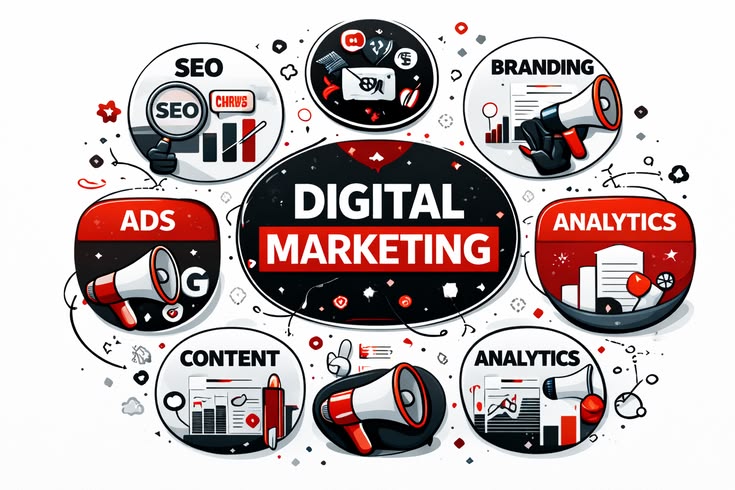
4. Choose Your Digital Marketing Channels
There are many digital marketing channels available to help grow your business. Select the ones that best fit your needs to maximize benefits. Your choice of channels should be guided by your goals, target audience, and budget.
5. Develop Effective Strategies
You can always adjust your digital marketing strategies to find what works best. Keep key factors—such as your audience, goals, and budget—in mind as you test and refine your approach.